Ultrafast Micro- and Nano-Machining
Ultrafast micro- and nano-machining uses femtosecond or picosecond laser pulses to precisely process materials at the micron-to-nanometer scale. The extremely short interaction time minimizes thermal diffusion and heat-affected zones, enabling "cold processing" of brittle, transparent, and heat-sensitive materials, with key applications ranging from precision cutting and drilling to 3D structuring and surface functionalization.
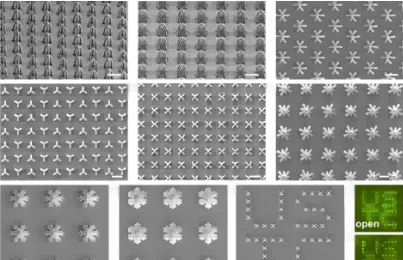
Surface Micro/Nano Structures
Surface micro- and nanostructures refer to precisely patterned features on material surfaces at the micron or nanometer scale, which are fabricated by ultrafast laser processing to endow surfaces with customized optical, wetting, adhesion, or tribological properties.
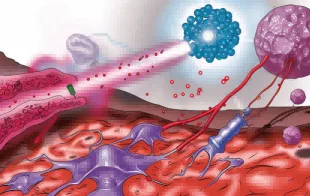
Laser–Tissue Interaction
Laser–tissue interaction studies the photophysical and photochemical effects of laser light on biological tissues—including absorption, scattering, ablation, and coagulation—providing the physical foundation for laser surgery, phototherapy, and biomedical diagnostics.
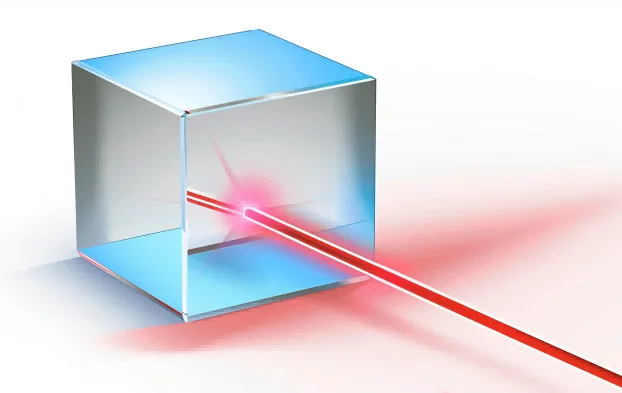
Volume Modification
Volume (or bulk) modification refers to the permanent alteration of material properties—such as refractive index, density, or chemical structure—within the interior of a transparent material (e.g., glass or crystal) induced by focused ultrafast laser pulses, enabling 3D photonic devices, optical data storage, and microfluidic components.
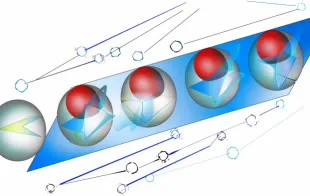
Color-Center Formation
Color center formation refers to the generation of point defects in transparent crystals or glass materials—typically induced by femtosecond laser irradiation or high-energy radiation—which create localized absorption bands and are exploited in solid-state laser gain media, optical data storage, and quantum memory applications.
Photoinduced Photopolymerization
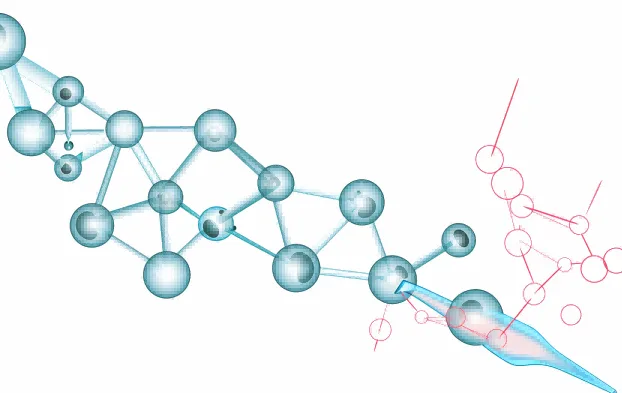
Light-induced photopolymerization is a process in which absorption of light (typically ultraviolet or femtosecond laser radiation) generates reactive species (radicals or cations) from photoinitiators, initiating crosslinking or chain-growth polymerization—forming solid 3D structures with high spatial resolution—and serves as the core mechanism for two-photon polymerization (TPP) microfabrication.