Laser–Tissue Interaction
Laser–tissue interaction studies the photophysical and photochemical effects of laser light on biological tissues—including absorption, scattering, ablation, and coagulation—providing the physical foundation for laser surgery, phototherapy, and biomedical diagnostics.
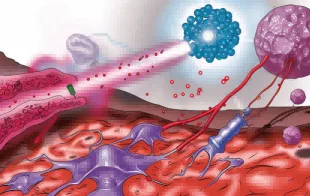
The interaction between lasers and biological tissue is an important and complex research field in modern medicine. In this field, laser light energy interacts with molecules and cells in biological tissue, producing various effects. These effects can be mainly divided into three categories: photothermal effects (laser energy converted into heat, causing tissue heating), photochemical effects (laser energy triggering chemical changes), and photomechanical effects (mechanical pressure produced by the laser). Different laser wavelengths and pulse durations produce different effects in biological tissue, because different types of tissue and cells have different absorption and scattering characteristics for the laser spectrum.
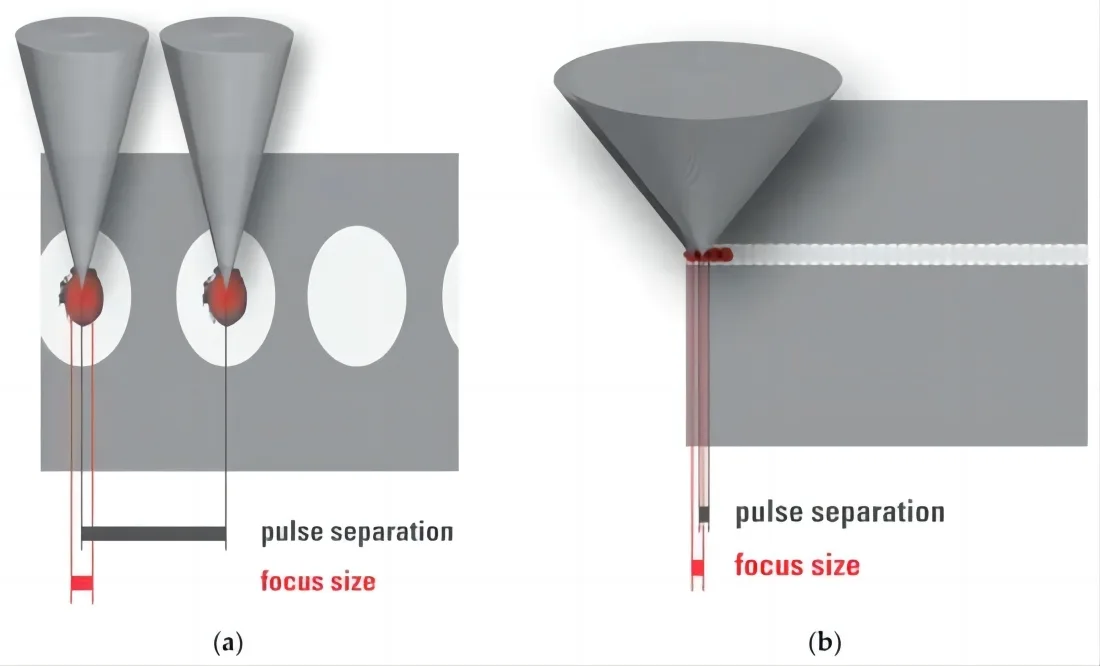
Figure: (a) high pulse energy, low repetition rate (large spot separation); (b) low pulse energy, high repetition rate (small spot separation, plasma overlap effect of spots).
Because of its extremely short pulse duration (usually on the femtosecond scale, i.e., 10⁻¹⁵ s) and high peak power, the femtosecond laser is especially important in medicine. These characteristics enable the femtosecond laser to precisely localize energy deposition within an extremely small region, thereby reducing thermal damage to surrounding healthy tissue. This is especially crucial for medical procedures requiring high precision and minimal damage, such as ophthalmic surgery, neurosurgery, and tumor resection.
In ophthalmology, femtosecond lasers are widely used in refractive surgery such as LASIK to precisely reshape the cornea and improve vision. Because of the high precision and low thermal damage of the femtosecond laser, it shows higher safety and effectiveness in this field compared with traditional laser technology. In addition, in neurosurgery, femtosecond lasers are used to cut and ablate brain tissue to treat diseases such as brain tumors.
Femtosecond lasers also have important applications in biological tissue imaging. For example, in multiphoton microscopy, femtosecond lasers are used to excite fluorescence, enabling scientists to obtain high-resolution images inside living tissue. Photoacoustic imaging is another technique using femtosecond lasers, combining the high resolution of optical imaging with the deep-penetration capability of ultrasound imaging.
In addition, the application of femtosecond lasers in medical surgery greatly improves the precision and safety of surgery. They can precisely cut or ablate diseased tissue without damaging surrounding healthy tissue. Finally, the application of femtosecond lasers has promoted the development of new medical treatment and diagnostic technologies, such as targeted drug-delivery technology and early cancer-screening technology.