Dispersion Management
Dispersion management is critical for controlling pulse broadening and distortion in ultrafast laser systems. This section introduces key concepts such as group velocity dispersion (GVD), third-order dispersion (TOD), and the use of dispersion-compensating elements—including prism pairs, grating pairs, and chirped mirrors—to achieve optimal pulse compression and high peak power.

Fourier-Transform-Limited Pulse Duration and Time–Bandwidth Product
This tool analyzes the time–bandwidth product (TBP) of ultrashort laser pulses and supports two calculation modes: Mode 1: Calculate the Fourier‑limit (transform‑limited) pulse duration from center wavelength and spectral bandwidth. Mode 2: Calculate the time–bandwidth product (TBP) from spectral bandwidth and actual pulse duration—to assess the chirp status and pulse quality. Ideal for femtosecond laser parameter optimization, pulse quality evaluation, and ultrafast experiment design.
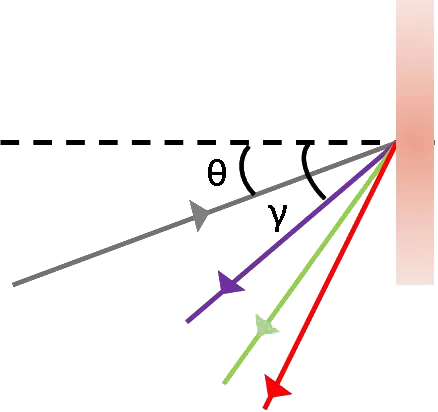
Calculation of Diffraction Angle and Littrow Angle for Gratings
This Calculator Will Help You To calculate The Diffracted Angle For A Given Incidence Angle and The Littrow Angle of Reflective Gratings.
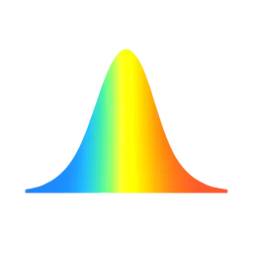
Broadening of Ultrashort Laser Pulses
This tool calculates the relationship between ultrashort laser pulse duration and second‑order dispersion (GVD, β₂) , supporting two calculation modes: Mode 1: Given input and output pulse durations, calculate the required second‑order dispersion (φ₂ = β₂·L). Mode 2: Given input pulse duration and second‑order dispersion, calculate the output pulse duration. Based on the Gaussian pulse dispersion broadening formula, it is ideal for dispersion compensation design and pulse propagation analysis in ultrafast optics.
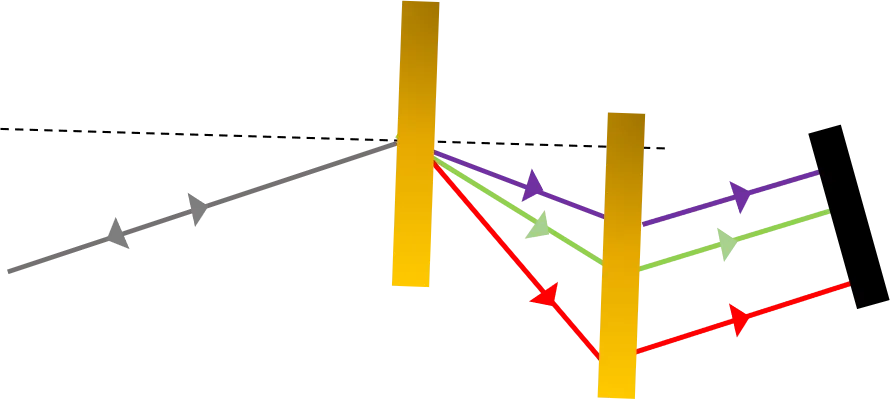
Temporal Dispersion of Grating Pair Compressors
This tool calculates the temporal dispersion of ultrashort laser pulses passing through a grating pair compressor, with two analysis modes: Mode 1: Single-Wavelength Dispersion Calculation Computes the GDD, TOD, and higher‑order dispersion terms for a single laser wavelength, enabling rapid assessment of phase evolution at specific wavelengths. Mode 2: Multi‑Wavelength Dispersion Calculation with Visualization Calculates the GDD and TOD values for a range of wavelengths (representing the pulse spectrum) and generates plots of dispersion vs. wavelength—revealing how different spectral components experience different phase delays and aiding in compressor optimization.
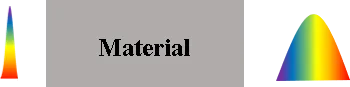
Temporal Dispersion of Materials
This tool calculates the temporal dispersion of optical materials for ultrashort laser pulses, with two analysis modes: Mode 1: Single‑Wavelength Dispersion Calculation .Computes the refractive index and dispersion terms (β₂, β₃, etc.) for a single laser wavelength in a specified material, enabling rapid assessment of pulse evolution at specific wavelengths. Mode 2: Multi‑Wavelength Dispersion Scan with Visualization Calculates the refractive index and dispersion values across a range of wavelengths and generates plots showing their wavelength dependence—revealing the material's dispersion profile and supporting dispersion compensation design and ultrafast experiment optimization.
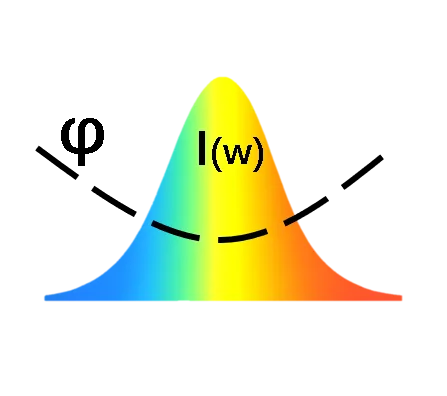
Import Spectrum to Calculate Fourier‑Limit Pulse Duration
Import spectral data to automatically compute the Fourier‑limit pulse duration (FWHM) and visualize both the spectrum and the transform‑limited pulse profile—ideal for femtosecond laser pulse analysis and compression optimization.
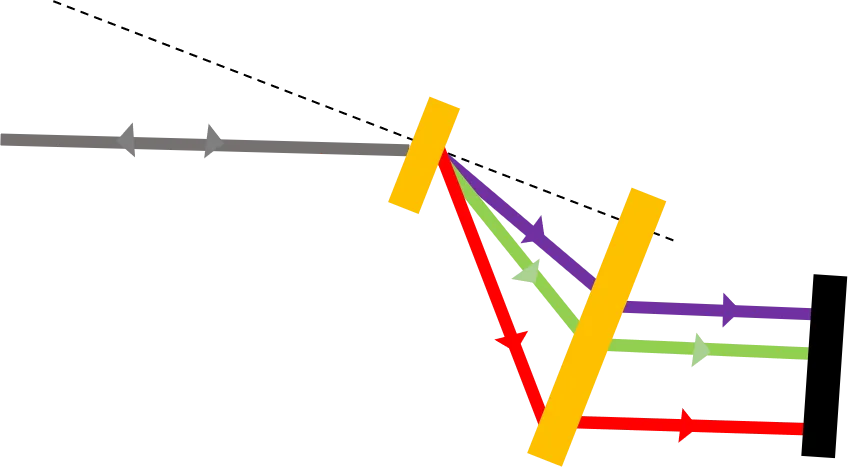
Grating Size Calculation for Pulse Compressors
This tool calculates the transverse diffraction dimensions on both gratings in a dual‑grating pulse compressor.
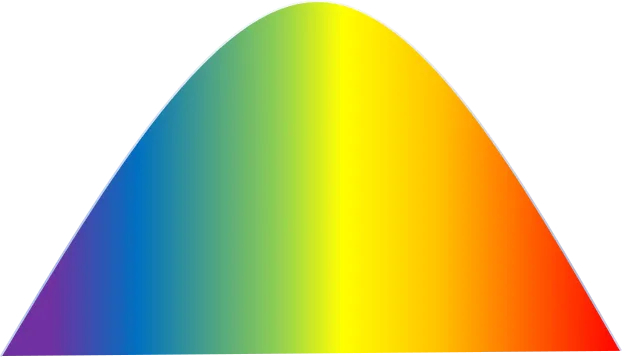
Conversion between Chirp Rate and Group Delay Dispersion (GDD)
Enter beam and grating parameters to compute the transverse diffraction widths on both gratings—ensuring the clear aperture meets clipping‑free requirements.
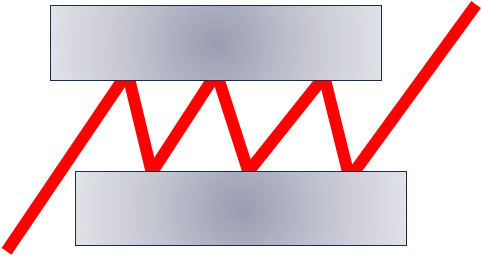
Optimal Separation Calculation for Chirped Mirrors
Enter the angle of incidence, beam size, and target number of reflections to automatically compute the optimal lateral and vertical separations, and output all spot positions on the first mirror—ideal for chirped mirror pair optical design and alignment.
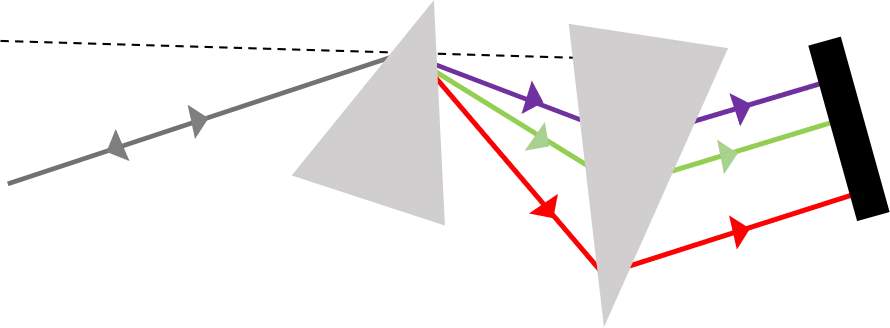
Dispersion of Prism Pairs
Select material and enter wavelength, separation, and prism angle to quickly compute refractive index and group delay dispersion (GDD)—ideal for dispersion management in femtosecond lasers.