Two-Dimensional Infrared Spectroscopy
Two-dimensional infrared (2D-IR) spectroscopy is a nonlinear technique that spreads the vibrational response of molecules across two frequency dimensions, revealing couplings between vibrational modes and their dynamic evolution on ultrafast timescales.

Two-Dimensional Infrared Spectroscopy (2D-IR) is a powerful spectroscopic analysis technique that plays an important role in chemistry, biology, and materials science research. Through detailed study of molecular vibrational states, this technique provides deep insight into intermolecular interactions and dynamic processes.
The core of 2D-IR spectroscopy is applying a series of infrared laser pulses to the sample and measuring its response, which reflects the energy transfer of molecules between different vibrational energy levels. By changing the time delay between laser pulses, a two-dimensional spectrogram can be generated, in which one axis represents the excitation frequency and the other represents the detection frequency, thereby revealing complex intramolecular interactions and dynamic changes.
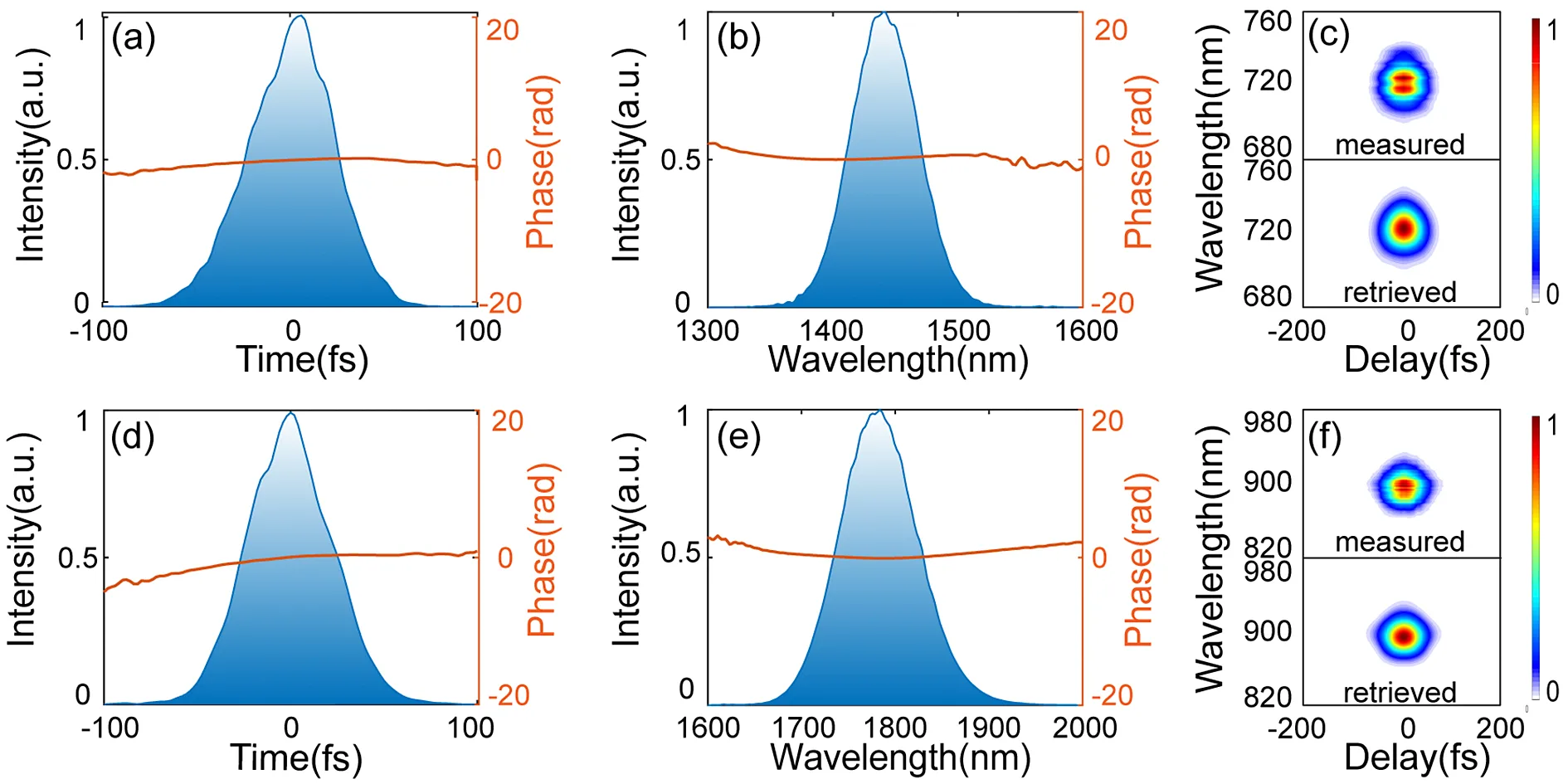
Figure 4: Temporal and spectral characterization of the output pulse.
In chemistry, 2D-IR spectroscopy can be used to study intermolecular interactions, the kinetics and mechanisms of chemical reactions, and the structural characteristics of compounds. This information is of important value for understanding the nature of chemical reactions and designing new chemical substances.
In biology applications, 2D-IR spectroscopy is especially helpful for studying the dynamic structural changes of proteins and other biomacromolecules. For example, it can reveal the protein folding process, the dynamic behavior of biomacromolecules under natural conditions, and their functional mechanisms in living organisms.
In materials science, 2D-IR spectroscopy can be used to analyze the molecular composition, electronic structure, and photophysical properties of materials. This is significant for developing new functional materials and optimizing the performance of existing materials.
Femtosecond lasers play a key role in 2D-IR spectroscopy. Because of the extremely short duration of femtosecond laser pulses, they can precisely excite specific vibrational states of molecules and capture extremely fast molecular dynamic processes. This high time resolution is key to understanding fast chemical reactions and biomolecular dynamics. In addition, the tunability of the femtosecond laser provides great flexibility for 2D-IR spectroscopy; the adjustability of pulse width, energy, and wavelength enables the femtosecond laser to be customized for specific molecular vibrations.
In summary, 2D-IR spectroscopy combined with femtosecond laser technology provides a precise and powerful means for studying molecular structure and dynamic processes.