Two-Dimensional Electronic Spectroscopy
Two-dimensional electronic spectroscopy (2DES) extends the 2D-IR concept to electronic transitions, using femtosecond pulse sequences to map the excitation–emission correlation and detect energy transfer, exciton dynamics, and quantum coherence in complex systems.
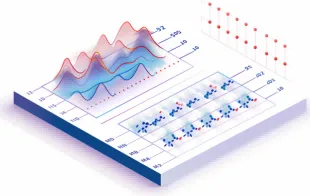
Two-Dimensional Electronic Spectroscopy (2DES) is an advanced spectroscopic technique with important applications in physics, chemistry, and biology research. By using a series of precisely controlled femtosecond laser pulses to excite the sample, 2DES can capture the complex dynamics and interactions of electronic excited states in molecular systems. This technique constructs a detailed two-dimensional spectrogram describing the interactions between electronic states of the sample by measuring the excitation and emission signals at different time delays.
2DES plays a vital role in studying photosynthesis, energy transfer, electron transfer, and the electronic dynamics of multi-pigment systems. Especially in photosynthesis research, 2DES can reveal the complex electronic interaction mechanisms among photosynthetic pigments, which is crucial for understanding how light energy is captured and converted into chemical energy.
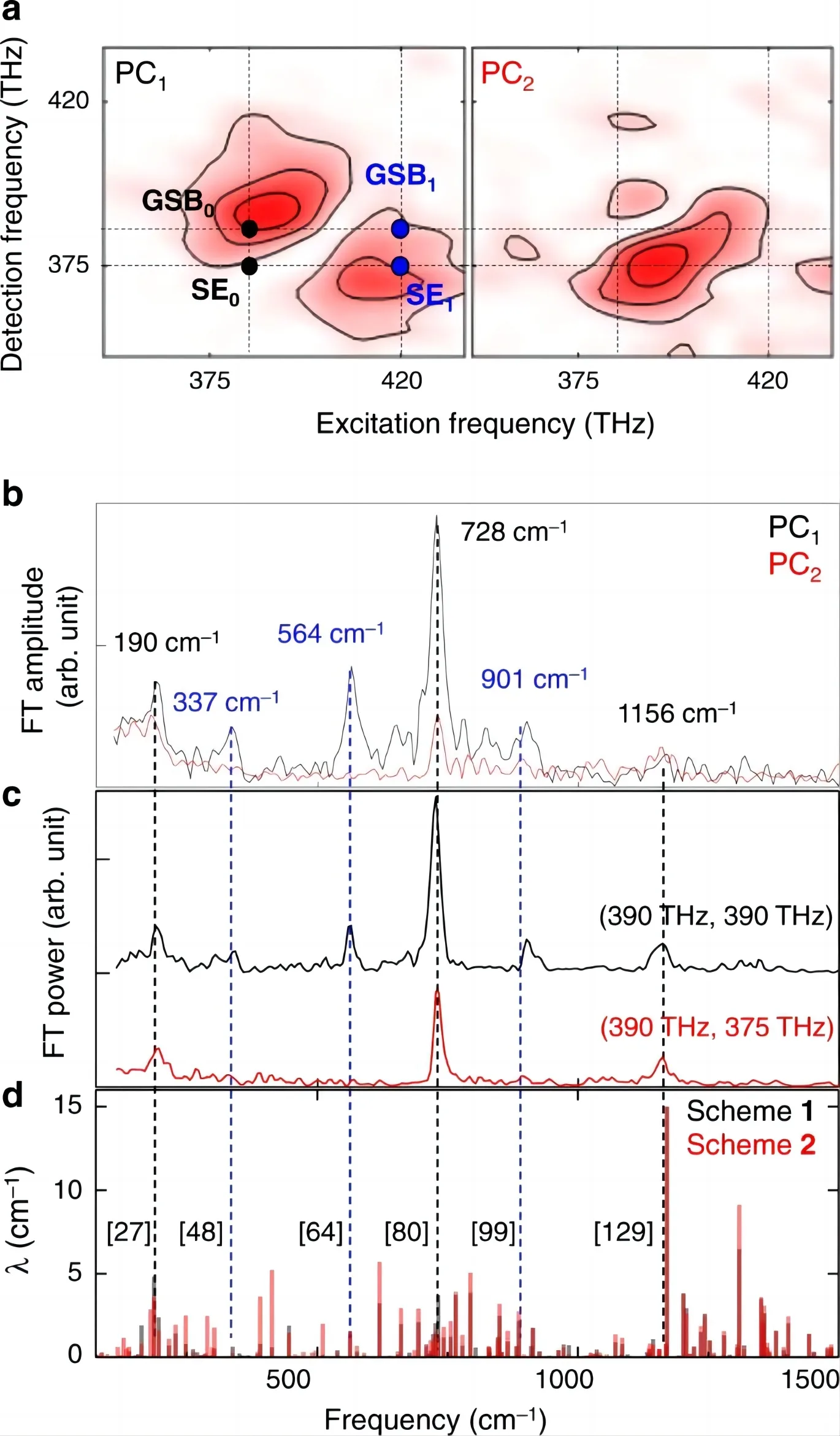
Figure: Two-dimensional optical spectra of the two principal components of a two-dimensional coherent vibrational spectrum.
In materials science, 2DES likewise demonstrates important value. This technique is widely used to study the electronic properties of organic semiconductors, quantum dots, and other nanostructured materials. Through in-depth analysis of the electronic dynamics of these materials, 2DES provides a key scientific basis for developing new optoelectronic devices, efficient solar cells, and other advanced electron-transfer-based technologies.
2DES is crucial for capturing fast electronic processes. The ultrashort-pulse characteristics of femtosecond lasers enable 2DES to achieve extremely high time resolution, which is crucial for studying processes such as fast electron transfer and electron–electron interactions. Femtosecond lasers not only provide precise time control but also ensure a high degree of controllability and repeatability of experimental conditions.
The applications of 2DES are not limited to traditional physics and chemistry; it also shows great potential in biology research. For example, in studying the electronic dynamics of biomolecules such as proteins and nucleic acids, 2DES can provide deep insight into their internal interactions and dynamic changes.