Sum-Frequency Generation Spectroscopy
A surface-specific vibrational spectroscopy technique that uses the nonlinear mixing of visible and infrared pulses to probe molecular orientation and structure at interfaces with submonolayer sensitivity.
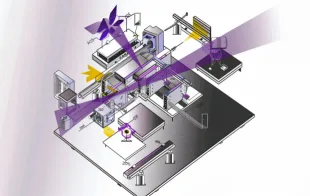
Sum-Frequency Generation Spectroscopy (SFG) is a nonlinear optical technique widely used in surface science and interface science. SFG technology produces a sum-frequency signal by making two light beams of different frequencies (usually infrared and visible light) interact at the sample surface. This sum-frequency signal carries detailed information about the molecular structure and arrangement at the sample surface. SFG is especially suitable for studying the molecular arrangement and dynamics of solid surfaces, liquid interfaces, and solid–liquid interfaces.
Femtosecond lasers are crucial in SFG technology. They provide a precisely controlled short-pulse light source that can generate high-efficiency sum-frequency signals. The high peak power and tunability of femtosecond lasers not only help enhance the intensity of SFG signals but also improve experimental sensitivity and resolution. This enables scientists to more accurately probe the structure and properties of material surfaces and interfaces at the atomic and molecular level.
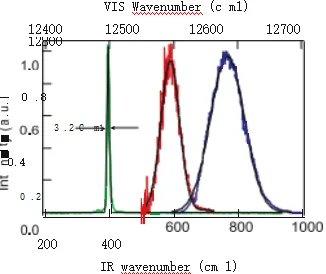
Figure: Surface vibrational SFG spectra of a crystalline PLLA film and a gold film.
In biochemistry and biophysics, SFG technology is widely used to study the interactions and arrangement of biomolecules at biological interfaces such as biological membranes. For example, SFG can be used to study the interactions of proteins and lipids on cell membranes, which is very important for understanding cell function and disease mechanisms.
In chemistry, physics, and materials science, SFG technology has a broad application range. It can provide important information about surface molecular arrangement, surface reaction dynamics, and interfacial properties. Especially in studying reactants and products on catalyst surfaces, SFG can reveal molecular details during the catalytic process.
The development of SFG technology is closely linked to the progress of femtosecond laser technology. The flexibility and tunability of femtosecond lasers enable SFG technology to be applied to a wider range of samples and environments. This includes in-situ surface and interface studies, such as observing changes at material surfaces under varying environmental pressure or temperature.
In summary, sum-frequency generation spectroscopy combined with femtosecond lasers provides a powerful analytical tool for surface science and interface science.