Polymer / Metal Polishing
Ultrafast laser polishing is a non-contact finishing technique that removes micro-scale surface asperities from polymers and metals through controlled ablation or melting, dramatically reducing surface roughness (Ra) while preserving the geometric integrity of the component—making it ideal for precision molds, medical implants, and optical components.
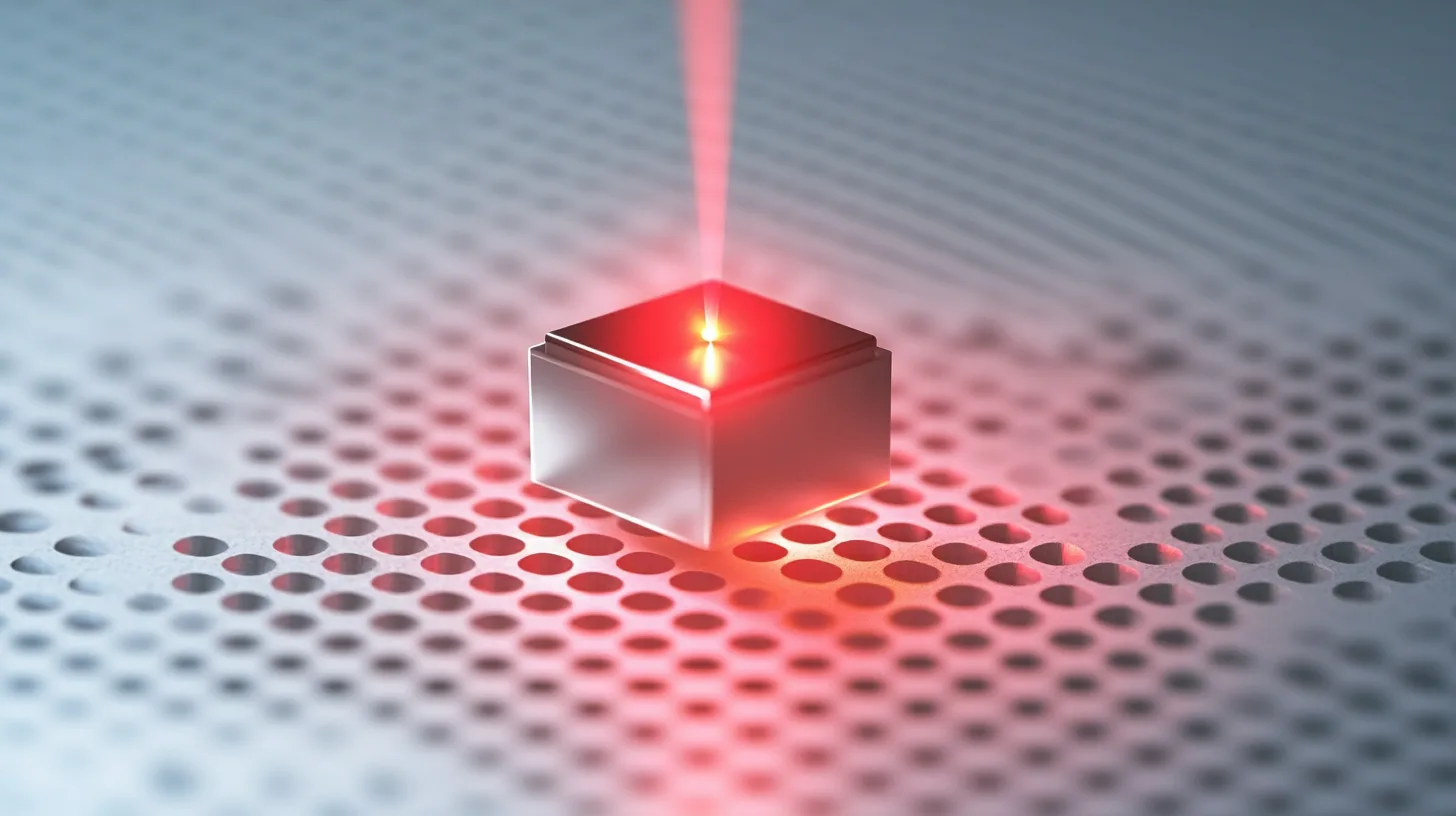
As an advanced precision machining tool, the femtosecond laser shows unique advantages in the fine polishing of polymer and metal surfaces. Femtosecond laser polishing can meet requirements for high precision and high surface finish, and its ability to precisely control polishing depth and surface quality makes it important in many high-end application fields. Especially in microelectronics and optical component manufacturing, femtosecond laser polishing is indispensable.
Femtosecond laser polishing uses ultrashort pulse durations to precisely remove tiny surface defects such as scratches, pits, or other irregularities. This precise control not only improves the polishing result but also ensures the uniformity and consistency of the surface. Because the femtosecond laser can precisely control the applied energy, it is an ideal choice for processing sensitive or high-value materials, ensuring machining precision while greatly reducing the risk of material damage.
Another important characteristic of the femtosecond laser is its ability to produce extremely short pulses. This means energy can be applied very precisely to the target area, greatly reducing the heat-affected zone. Such high-precision localized processing is extremely important in many high-tech fields, such as semiconductor manufacturing or optical component processing. Because the short pulse duration limits heat transfer, femtosecond laser polishing reduces thermal effects on the material, which is especially important for heat-sensitive materials. Moreover, since femtosecond laser polishing is a non-contact process, it also reduces physical wear and induced stress, further improving processing quality.
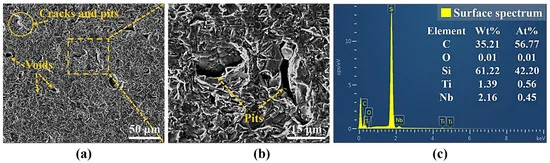
Figure 1: SEM images and EDS elemental analysis of the initial surface. (a) initial surface morphology, (b) partial magnified detail of the inset, (c) EDS elemental analysis of the inset (b).
Femtosecond laser polishing can significantly improve the surface finish of polymers and metals. In applications requiring high-precision surfaces, such as optical components and microelectronic devices, improved surface finish directly relates to product performance and reliability. Through femtosecond laser polishing, these material surfaces achieve not only high finish but also better optical and electrical characteristics, thereby improving the overall quality of the final product.
Finally, the precise control and low thermal impact of femtosecond laser polishing give it unique advantages in machining materials and complex shapes that are difficult for traditional polishing methods. This technology not only expands the application scope of polishing but also offers new possibilities for high-precision machining. Whether in aerospace, biomedicine, or precision instrument manufacturing, femtosecond laser polishing demonstrates its irreplaceable importance.
In summary, femtosecond laser polishing shows unique advantages and broad application prospects in the surface treatment of polymers and metals. From the precisely controlled polishing process to the fine handling of complex shapes and sensitive materials, femtosecond laser polishing is becoming an indispensable part of modern manufacturing.