Glass Drilling
Ultrafast laser drilling of glass employs high-intensity femtosecond or picosecond pulses to create high-aspect-ratio, tapered, or straight-through holes with negligible chipping and micro-cracking. This method is widely used in consumer electronics, medical devices, and optical component manufacturing, where conventional mechanical drilling often fails due to glass brittleness.
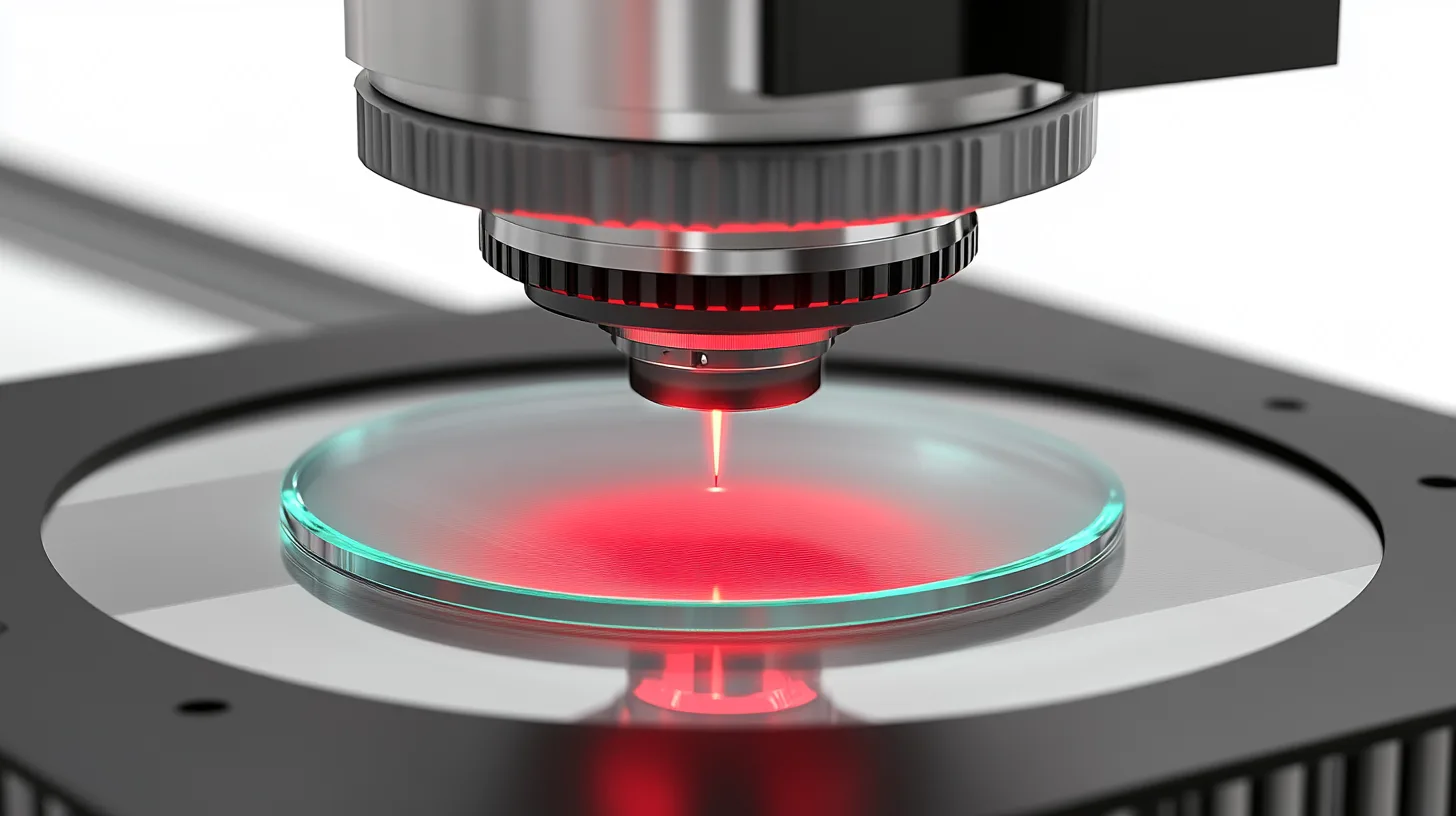
Glass drilling is a key process for creating tiny holes in glass materials, with broad applications across many fields. Because of glass’s brittleness and irregular fracture behavior, traditional glass-drilling techniques such as mechanical drilling and ultrasonic drilling face many challenges in accuracy and processing results. Mechanical drilling, though common, easily produces cracks and fractures, limiting its use in fine machining. Ultrasonic drilling can reduce crack formation but is slow and causes considerable equipment wear. These traditional methods often struggle to meet requirements when processing complex shapes or drilling glass with extremely high precision.
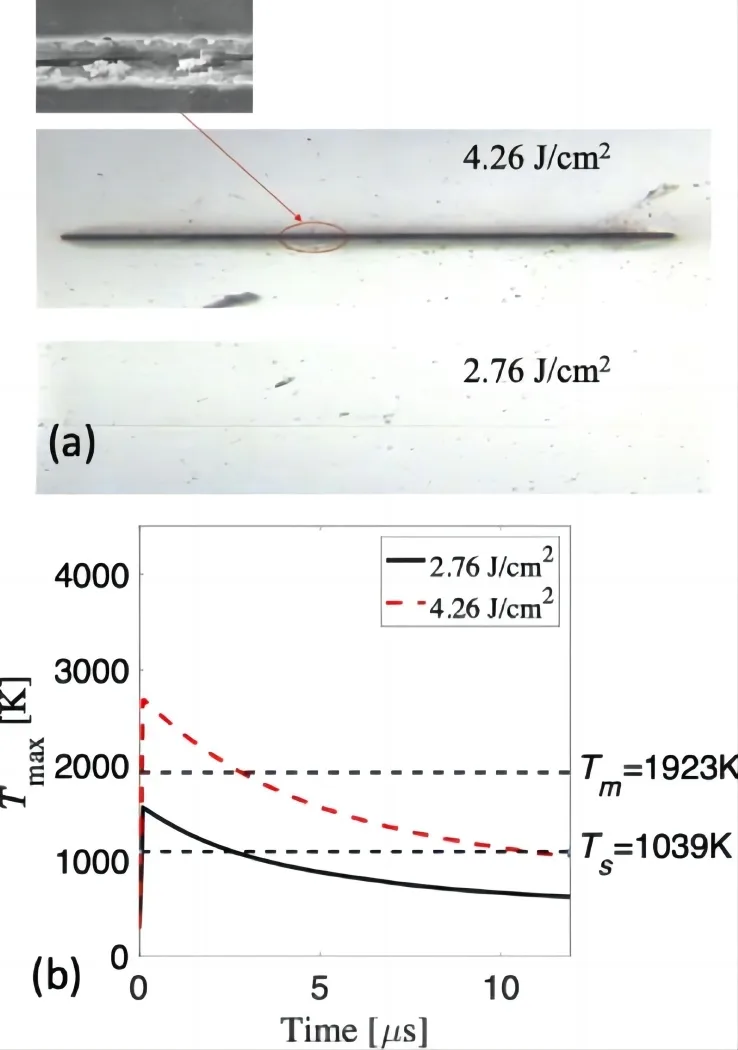
Figure: (a) Micrograph of line-scan-based processing, and (b) predicted surface temperature evolution for two laser fluences.
By contrast, laser drilling — with its non-contact nature and high precision — has gradually become one of the mainstream methods for glass drilling. Femtosecond laser drilling, in particular, shows significant advantages in this field. Femtosecond laser drilling uses laser pulses of extremely short duration, which can produce a high-intensity beam inside the glass material without generating excessive thermal effects at the surface. This is crucial for reducing thermal stress and crack formation in glass, especially when processing thin glass or highly brittle glass materials.
In the automotive industry, glass drilling is used to make ventilation and decorative holes in automotive glass, while in construction it is widely used to make decorative and safety glass. Traditional mechanical or ultrasonic drilling methods may introduce risks of cracking and fracture in these applications, whereas femtosecond laser drilling can effectively avoid these problems, improving the quality and safety of finished products.
In consumer electronics, such as the glass screens of smartphones and tablets, precise glass-drilling technology is equally crucial. These glass screens require the installation of cameras, sensors, and buttons, with extremely high requirements for hole position, size, and shape. Femtosecond laser drilling can provide such high precision and high-quality processing, ensuring product aesthetics and functionality.
In medical and laboratory equipment manufacturing, precise glass drilling is likewise crucial. The glass components in these devices often require precise fluid channels and connectors, with extremely high demands on drilling precision and finish. Femtosecond laser drilling demonstrates unmatched precision and processing quality in these applications.
Another advantage of femtosecond laser drilling is that it can precisely control the size, shape, and depth of holes, making it especially important in high-precision applications. This technology is particularly suitable for glass drilling requiring extremely high processing quality and complex shapes, such as the manufacture of microfluidic devices and precision optical components. In these fields, traditional drilling methods often cannot achieve the required precision and quality, whereas femtosecond laser drilling can meet these high standards.
In summary, the application of femtosecond laser drilling in glass drilling demonstrates its unique advantages, surpassing traditional methods in precision and efficiency and opening new application prospects across many industries. From automotive manufacturing to consumer electronics and medical device manufacturing, femtosecond laser drilling is gradually becoming an indispensable key technology in these fields.