Glass Cutting
Ultrafast laser glass cutting uses focused femtosecond pulses to create internal modification lines within transparent glass, enabling controlled separation along predetermined paths with minimal edge chipping and exceptional edge quality. This technology has become indispensable in the production of thin glass displays, MEMS packaging, and optical windows.
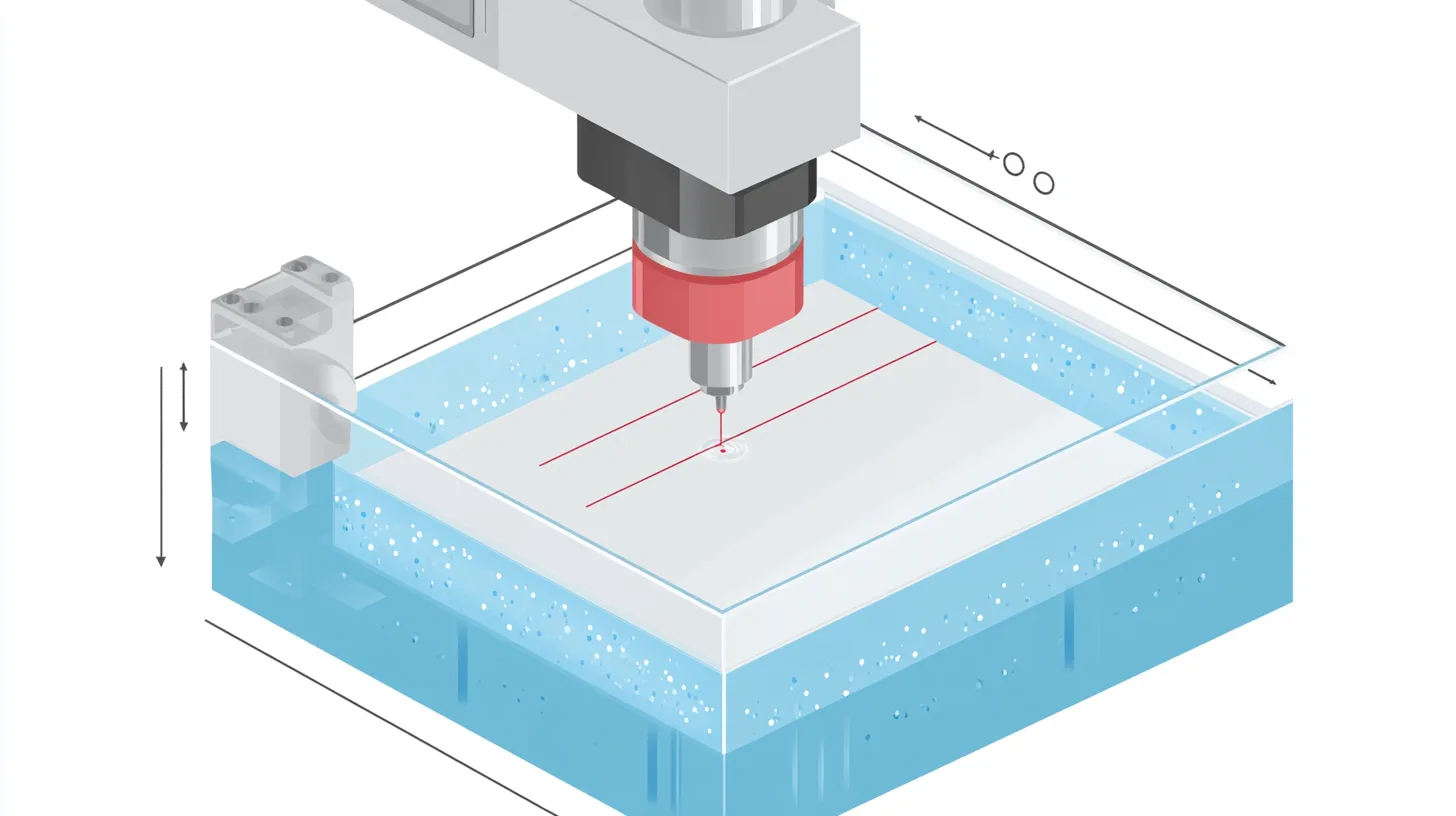
Glass cutting is a key technology for precisely forming cuts in glass materials, playing an important role in many fields. This technology must maintain the straightness of the cut while minimizing material loss. Typically, glass cutting involves scoring a weak line on the glass surface and then applying pressure to break the glass along that line. Although traditional glass-cutting methods — such as scoring with diamond blades or carbide wheel cutters — are widely used, these methods may produce uneven cuts and unnecessary material loss. These limitations have driven the search for more advanced solutions.
In recent years, laser technology has been widely applied in glass cutting. The principle of laser glass cutting is to use a high-energy laser beam to generate sufficient heat at the glass surface to soften or melt the glass, thereby forming a precise cut. Compared with traditional mechanical cutting methods, laser cutting can achieve higher precision and less material loss. In addition, laser cutting can provide smoother cut edges, reducing the need for subsequent processing.
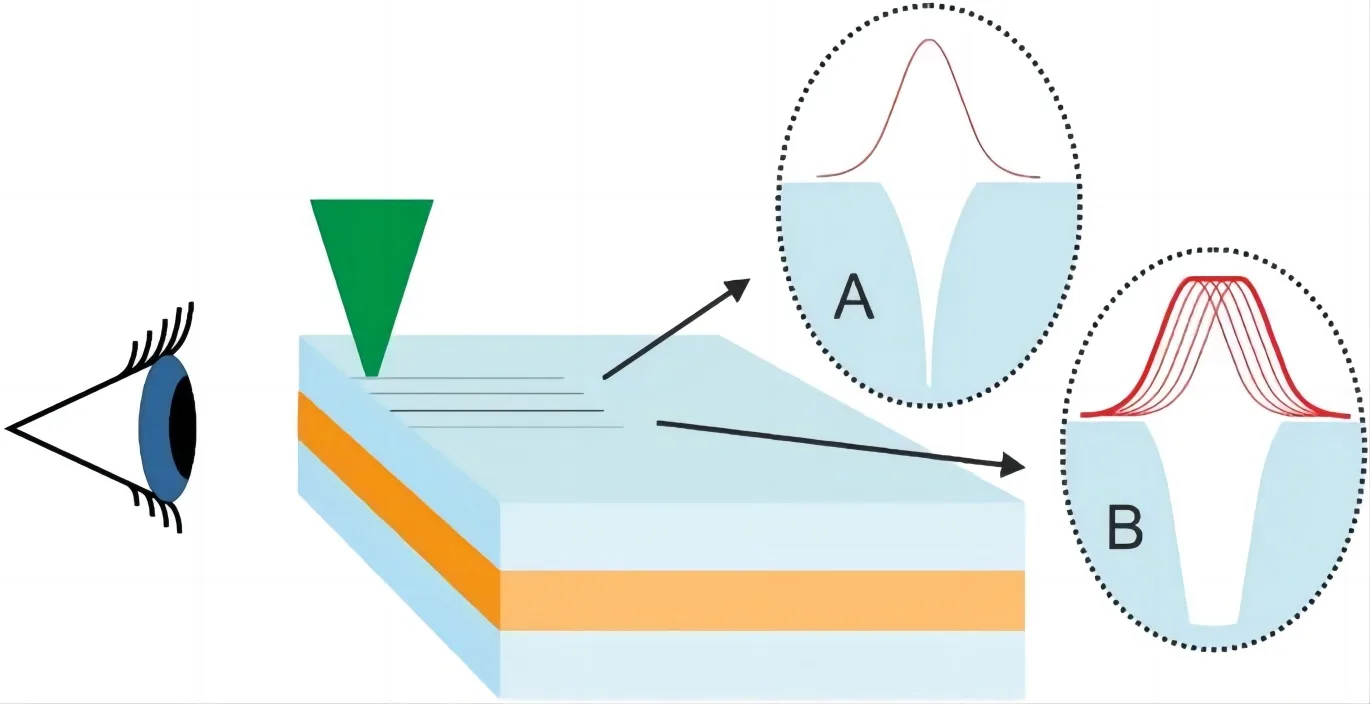
Figure: Schematic of the cutting-test setup for a single cut line (A) and multiple cut lines (B). The cuts are placed at the edge of the sample so that results can be inspected via an optical microscope on the left sidewall.
Glass-cutting technology is widely used in construction, automotive, consumer electronics, and art. In construction, precise glass cutting is used to make windows, doors, and curtain walls, which have strict requirements for glass size and shape. In the automotive industry, glass cutting is used to manufacture car windows and windshields, which must meet safety standards while providing good visual effects. In consumer electronics, such as smartphones and tablets, precise glass cutting is used to make the glass covers of touchscreens and displays. These products have extremely high requirements for glass quality and precision to ensure a good user experience and device performance. In addition, glass cutting is very important in the creation of artworks, with artists using this technology to create exquisite glass works.
In the field of glass cutting, femtosecond lasers are becoming increasingly important because of their high precision and control. Femtosecond lasers can precisely cut glass without producing thermal stress, which is especially important for reducing cracks and fractures. Because femtosecond laser pulses have an extremely short duration, they can produce cutting inside the glass material without generating excessive thermal effects at the surface. The advantage of this technology lies in its ability to achieve fine cutting, whether straight cuts or complex curved cuts. In addition, femtosecond laser cutting can reduce or eliminate subsequent processing steps such as edge grinding or polishing, thereby improving production efficiency.
Femtosecond laser cutting is especially suitable for cutting complex shapes or very thin glass materials, such as smartphone screens or other precision optical components. In these applications, the requirements for cutting precision are extremely high, and any small error may affect the performance of the final product. The use of femtosecond lasers also provides more flexibility and design possibilities for glass cutting.
In summary, glass-cutting technology plays a vital role in modern industry and artistic creation. With the development of femtosecond laser technology, the precision and efficiency of glass cutting have improved significantly, bringing new possibilities and improvements to many industries.