Fiber Cutting
Optical fiber cutting using ultrafast lasers enables clean, high-quality end-face cleaving of optical fibers with minimal surface roughness and no micro-cracks, essential for low-loss splicing and connectorization in telecommunications and sensor systems.
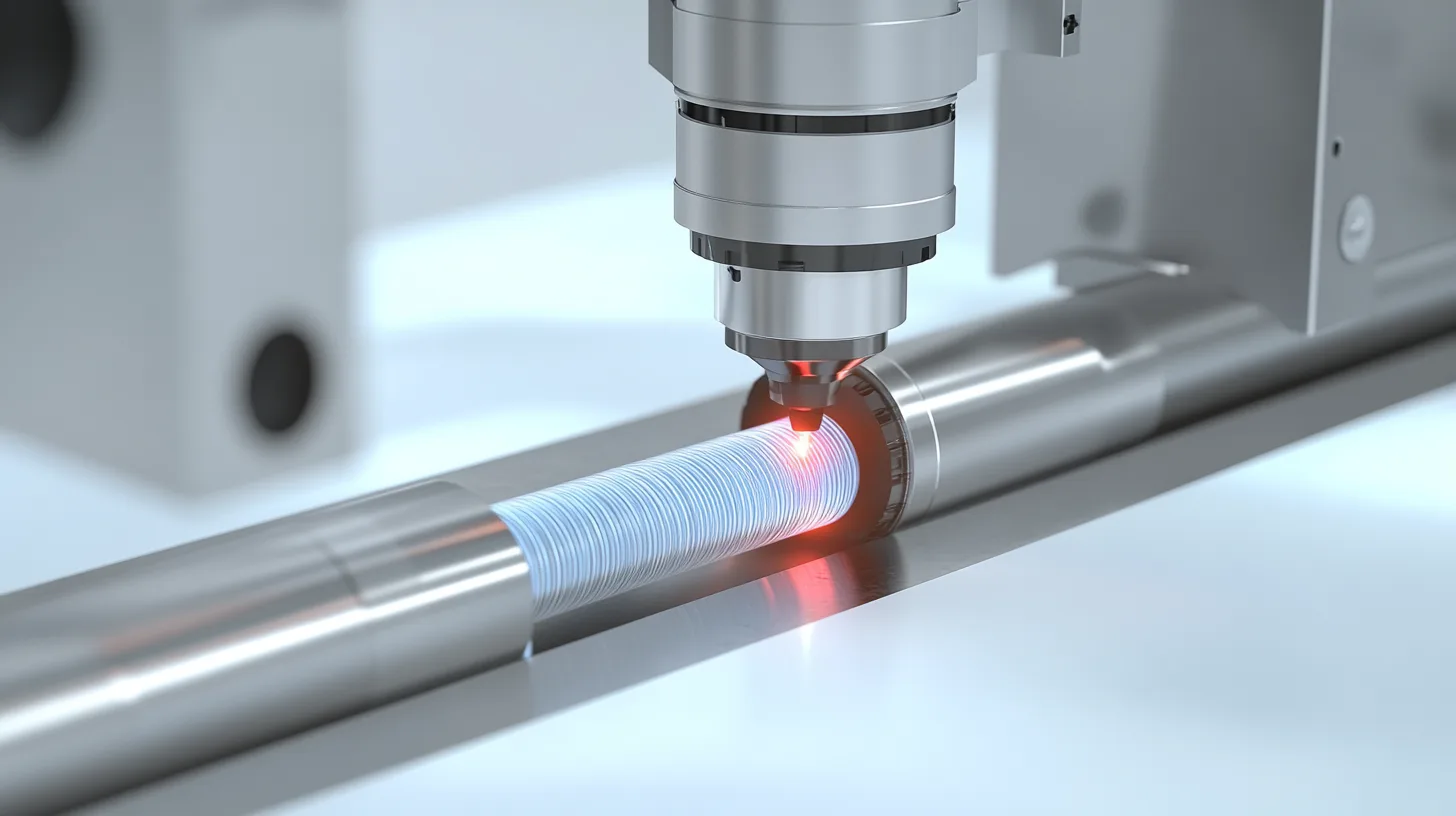
Fiber cutting plays a vital role in modern industrial processing; it is a key technology for precisely cutting various fibrous materials. This technology is widely used in textiles, composites, and optical fibers. The core of fiber cutting lies in using high-precision cutting tools, which include lasers, ultrasonic blades, or specially made mechanical blades. Among them, laser cutting is especially suitable for processing high-strength, high-density fibrous materials because of its high energy density and precise control. This high-precision cutting method not only improves production efficiency but also ensures the quality and consistency of cut products.
In the textile industry, fiber-cutting technology is used to precisely cut fabric to make clothing, tents, and other textiles. This application makes the production of clothing and textiles more efficient and precise, meeting market demand for diverse and personalized products. In aerospace and automotive industries, fiber cutting is used to manufacture components of carbon fiber and other composites. Known for their high strength and light weight, these materials are indispensable in modern aerospace and automotive industry. Fiber-cutting technology can precisely cut these complex materials, ensuring the precision and performance of components.
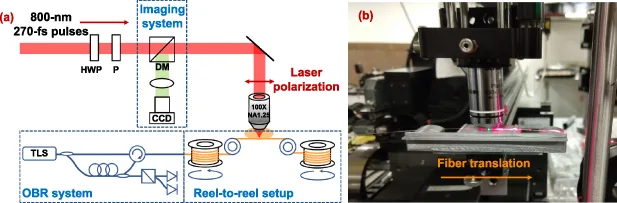
Figure: (a) fabrication setup diagram. HWP: half-wave plate; P: polarizer; DM: dichroic mirror; TLS: tunable laser source. (b) photo of the laser-writing fabrication device.
In addition, fiber cutting is also very important in optical communications, especially in precisely trimming and preparing optical fibers. In optical communication systems, the quality of optical fibers directly affects the transmission efficiency and stability of signals. Fiber-cutting technology can ensure the precision of fiber connectors and the integrity of fibers, thereby improving the performance of the entire optical communication system.
In these application areas, the use of femtosecond lasers is increasing, playing an increasingly important role in fiber-cutting technology. Femtosecond lasers are known for their high precision and fast cutting capability, especially when processing high-strength, high-density, or heat-sensitive fibrous materials, where they show unmatched advantages. A notable advantage of femtosecond laser cutting lies in its extremely short pulse duration, which greatly reduces the heat-affected zone of the material. This is crucial for achieving precise cutting while preserving fiber integrity, especially during the cutting of optical fibers and high-performance composites.
In summary, fiber-cutting technology is an indispensable part of modern industry, playing an important role across many industries. With the continuous advancement and application of femtosecond laser technology, the precision and efficiency of fiber cutting have improved significantly, bringing new possibilities and higher production efficiency to these industries.