High-Harmonic Generation
Attosecond Pulse Generation、Extreme Ultraviolet (XUV) Light Sources
High-Harmonic Generation (HHG) is a nonlinear optical phenomenon produced under the action of a strong laser field. Its principle is that when a strong laser field (such as a femtosecond laser) interacts with matter (such as a gas or solid), light is produced at frequencies that are integer multiples of the original laser frequency. In the HHG process, electrons in the atoms or molecules are strongly pulled by the laser field, gaining enough energy to be ionized. These electrons are then accelerated by the laser field and return to the vicinity of the atom or molecule; during their return, they interact again with the atom or molecule, radiating high-energy photons — that is, producing high harmonics.
In the HHG process, the femtosecond laser plays a vital role. Femtosecond lasers have extremely short pulse widths and high peak power, able to provide a sufficiently strong electric field to drive the electron dynamics. These characteristics enable the femtosecond laser to effectively interact with atoms or molecules to produce high harmonics. Using femtosecond lasers, scientists can precisely control the motion of electrons, thereby tuning the characteristics of the generated high harmonics, such as frequency and phase. In this way, HHG technology can be used to produce extreme ultraviolet (XUV) light and soft X-rays, which is crucial for studying atomic and molecular structures and dynamic processes.
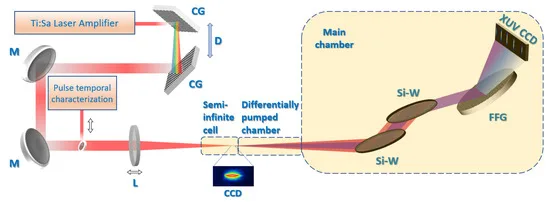
Figure 1: Schematic of the HHG experimental setup.
HHG technology occupies an important position in ultrafast spectroscopy research, able to reveal intermediate and transition states of chemical reactions. This technology provides a powerful tool for studying the formation and breaking of chemical bonds, helping deepen understanding of the fundamental mechanisms of complex chemical reactions. In addition, the short-wavelength light source produced by HHG has broad applications in high-resolution microscopic imaging, for example in the study of intracellular structures and biomacromolecules.
Beyond this, HHG also plays an important role in materials science, environmental science, and engineering technology. In materials science, HHG can be used to study the electronic properties of new materials, revealing the internal electronic structure and dynamic changes; in environmental science, HHG can be used to monitor and analyze environmental pollutants. In summary, because of its unique high resolution and high sensitivity, HHG technology has extremely broad application prospects in scientific research and technological development.